 North Korea Goes Hypersonic—KAMD Needs Northrop Grumman’s IBCS
 이스라엘군, ‘아라드’ 소총 수천 정 배치…전국 신속대응부대 무장 완료
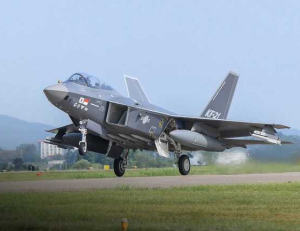
 [단독] 파기 위기였던 KF-21… 인도네시아, 블록Ⅱ 16대 구매 ‘급선회’
 미 공군 중부사령부 “2025년, 중동 공중우세 확보”
 KF-21 블록2 위한 무장시험 시작, 말레이시아 공군 차세대 전투기로 주목!

 목록
목록


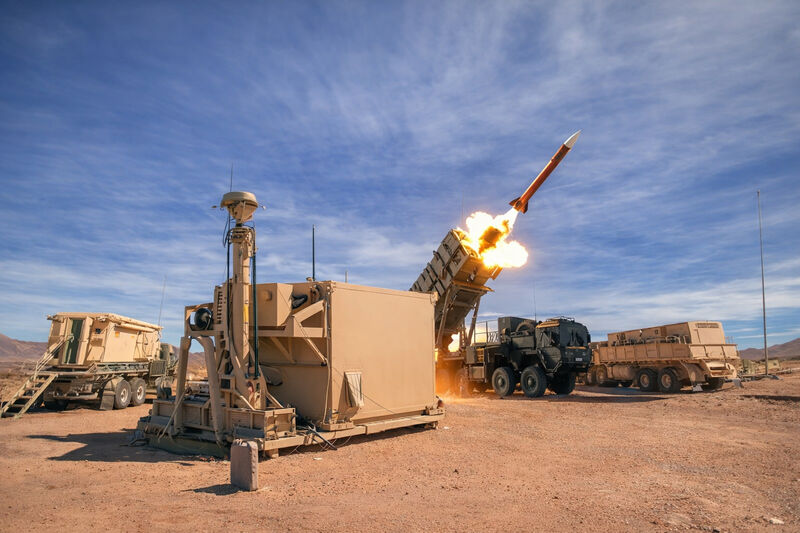 Integrated Battle Command System Defeats Maneuvering Threats With Emerging System On January 5, North Korea’s state-run Korean Central News Agency (KCNA) reported that hypersonic missiles launched northeastward from Pyongyang’s Yeokpo District struck targets set along a 1,000-kilometer line in the East Sea (Sea of Japan), following four days of launch drills. Conducted under the supervision of Kim Jong Un, the exercises were assessed as a comprehensive evaluation of hypersonic weapon readiness, mission execution capability, missile force fire-control proficiency, and the sustainability and responsiveness of North Korea’s war-deterrence posture.
Pyongyang did not disclose the specific missile type or technical details. However, military analysts inside and outside South Korea suggest the system may be a variant of the KN-23 series fitted with a hypersonic glide vehicle (HGV) warhead—often referred to as “Hwasong-11Ma.” As North Korea continues to highlight its hypersonic capabilities, advanced militaries in the United States and Europe have already begun a fundamental shift in air and missile defense doctrine.
Rather than merely linking individual weapon systems, the emerging model integrates land, sea, and air sensors and interceptors into a single network. This architecture supports commander decision-making through automated target assignment and optimized interceptor selection, dramatically compressing engagement timelines in complex, high-density threat environments.
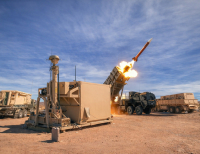
At the center of this transformation is the Integrated Battle Command System (IBCS), developed by U.S. defense prime Northrop Grumman. Often described as the “internet of air defense,” IBCS is designed to decouple sensors from shooters and connect them through a resilient, software-defined command-and-control network. Built around the “Any Sensor, Best Shooter” concept, the system allows targeting data from any available radar or sensor to be shared across the network, enabling the most suitable interceptor to be automatically selected—even if the original tracking radar is destroyed or loses contact with the target.
IBCS is currently being fielded by the U.S. Army, and Poland became the first country outside the United States to adopt the system, completing live-fire testing and achieving Full Operational Capability (FOC) verification in 2025. The Polish case is widely cited as a benchmark demonstrating that legacy and next-generation interceptors can be fused into a single, coherent air defense architecture through IBCS.
South Korea’s KAMD has steadily expanded its layered interceptor inventory—including Patriot, Cheongung-II (KM-SAM), and the future L-SAM—but critics argue that sensors, fire control, and engagement decision-making remain siloed by system. In practice, KAMD still operates as a “layered but disconnected” defense. This structure faces inherent limitations against hypersonic threats, complex mixed-salvo launches, and sophisticated deception tactics, where automated recommendation, assignment, and rapid engagement decisions are essential.
As a result, military officials increasingly point to applying Northrop Grumman’s IBCS first to the Patriot system—the backbone of South Korea’s ballistic missile interception—as a realistic starting point for KAMD modernization. Combining a combat-proven interceptor, validated from the 1991 Gulf War through recent conflicts, with a next-generation networked command system could significantly enhance air defense effectiveness while minimizing technical and financial risks.
The issue also carries alliance implications. U.S. Forces Korea are expected to complete IBCS fielding in the first half of 2026. If South Korea maintains its current architecture, concerns are growing that real-time data sharing and automated coordination in combined ROK-U.S. air and missile defense operations could be constrained. Such limitations would directly affect one of the core conditions for the transition of wartime operational control: the alliance’s comprehensive capability to counter North Korea’s nuclear and missile threats.
Beyond immediate defense requirements, IBCS adoption has strategic industrial implications. Rather than a simple purchase of foreign equipment, integration could expand participation by South Korean defense firms through technology cooperation with Northrop Grumman and other partners, strengthening the global competitiveness of Korea’s defense industry. With NATO members in Europe and partners in the Middle East also moving toward IBCS, interoperability is increasingly becoming a de facto requirement. For South Korea’s indigenous surface-to-air missiles—such as Cheongung-II and L-SAM—to remain competitive in export markets, compatibility with network-centric command systems is rapidly becoming essential.
North Korea’s latest hypersonic missile tests underscore how quickly the speed and complexity of missile threats are increasing. As much of the world has already shifted toward “connected air defense,” calls are growing louder that South Korea can no longer delay a transition toward an integrated, automated, network-centric missile defense architecture.
K-DEFENSE NEWS | Strategic Analysis Desk
#IBCS #NorthropGrumman #HypersonicThreat #KAMD