Between mid-January and mid-February, K-Defense demonstrated a structural shift — from platform-centric exports to lifecycle ecosystem partnerships, from visible firepower to non-kinetic capabilities, and from domestically focused production to globally integrated supply chains.
Norway finalized a major agreement through the Norwegian Defence Materiel Agency
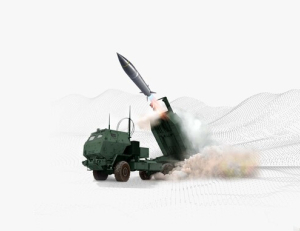
(NDMA) to procure the Korean-made Chunmoo Multiple Launch Rocket System (MLRS). The contract is valued at approximately $975 million, converted at today’s exchange rate, with deliveries scheduled through July 2029. The agreement reflects Europe’s accelerated push to strengthen long-range precision fires capabilities amid ongoing security concerns. Chunmoo’s competitive advantages reportedly included rapid production timelines, integrated munitions packages, and scalable manufacturing capacity.
In Southeast Asia, Philippines signed a Performance-Based Logistics (PBL) agreement for its FA-50PH fighter fleet under the Department of National Defense. The contract is estimated at approximately $75 million, based on the current exchange rate, and will run through 2029. Unlike traditional maintenance contracts, PBL agreements tie compensation to operational performance metrics, including aircraft availability rates and readiness levels. This model transforms fighter exports into recurring lifecycle revenue streams rather than one-time sales. Defense observers view the Philippines agreement as a template that could expand to other FA-50 operators across Southeast Asia and potentially the Middle East.
Domestically, LIG Nex1 launched development of the Block-I Electronic Warfare aircraft program, backed by an investment of approximately $1.42 billion at the current exchange rate. Targeted for deployment in 2034, the system is designed to conduct long-range jamming against integrated air defense systems and command-and-control networks. The program highlights a growing emphasis on electromagnetic and information dominance — capabilities increasingly seen as decisive in modern conflict. Officials describe the initiative as part of a broader transition toward non-kinetic battlefield superiority, where disabling enemy sensors and networks can be as critical as physical strike power.
January also saw progress in space-sector coordination, including the launch of a Low-Earth Orbit (LEO) satellite communications industry council designed to align satellite, ground system, and service providers. Meanwhile, Defense Agency for Technology and Quality(DTaQ) initiated a pilot defense space quality certification program aimed at validating space-related components against international standards. These steps signal South Korea’s intention to strengthen export competitiveness in space-enabled communications and ISR systems, where reliability certification and interoperability are becoming increasingly important.
HD Hyundai expanded engagement in Saudi Arabia, presenting the export-oriented HDF-6000 frigate and discussing phased local production partnerships. Saudi Arabia’s Industrial Participation Program (IPP) requires increasing domestic production content — a policy trend also emerging in parts of Europe. Korean firms are responding by pursuing overseas supply chain partnerships and exploring localized maintenance and assembly operations.
Software-Centric Acquisition Reform Advances
Alongside export momentum, South Korea is advancing procurement reforms that emphasize software capability evaluation, improved transparency in technical scoring, and modernization of acquisition processes. Legislative discussions surrounding software-centric weapon system acquisition reflect a strategic recognition that combat effectiveness increasingly depends on software agility, data integration, and rapid upgrade cycles rather than static hardware alone.
January’s developments suggest that South Korea’s defense industry is evolving beyond traditional platform exports toward integrated lifecycle partnerships and advanced non-kinetic capabilities. In the short term, execution of the Norway Chunmoo contract and expansion of PBL agreements will serve as key indicators of sustained momentum. Over the medium term, electronic warfare maturity, space certification capabilities, and overseas localization networks will determine whether K-Defense can solidify its role as a long-term strategic defense partner across Europe, Southeast Asia, and the Middle East.
K-DEFENSE NEWS | Strategic Analysis Desk
#KDefense #KDefenseIndustry #KoreanDefense #DefenseExports #Chunmoo
#MLRS #NorwayDefense #FA50 #PhilippinesAirForce #PerformanceBasedLogistics
#ElectronicWarfare #LIGNex1 #SpaceDefense #DefenseSpace #SaudiDefense
#NavalExports #GlobalDefense #EuropeanRearmament #DefenseProcurement
#AerospaceDefense


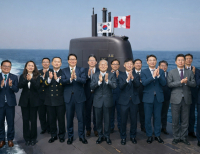 South Korea Rallies Whole-of-Government Support for Canadian Submarine Bid
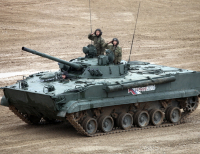 "계획 대비 40% 초과 생산"… 러시아, 우크라이나전 승부수로 BMP-3 선택
 “연 8대 못 채우면 문 닫는다”…A400M, 2028년 세비야 라인 폐쇄 경고
 “섬을 넘는 화력”… 인도-태평양 흔드는 하이마스
 [대영제국 단독] 대한민국 공군! C-390 수송기와 F-15K 성능 개량으로 강력해진다!
 목록
목록