Defense Acquisition Program Administration (DAPA) has officially restarted the contractor selection process for the Korean Next-Generation Destroyer (KDDX). On Feb. 11, DAPA held a pre-bid briefing outlining performance requirements, acquisition timelines and evaluation procedures ahead of a formal request for proposals (RFP) expected in the first half of the year. The selected shipbuilder will conduct detailed design and construct the lead ship.
The restart follows extended delays tied to procedural disputes and disagreements over contractor selection frameworks. The slowdown raised concerns within defense circles about potential gaps in the Republic of Korea Navy’s surface combatant modernization timeline. KDDX is intended to replace aging destroyers and anchor the ROK Navy’s future fleet architecture with a domestically integrated combat system and advanced sensors. With regional naval competition intensifying and neighboring powers expanding blue-water capabilities, restoring schedule discipline has become increasingly urgent. DAPA officials have emphasized the need to recover lost time to prevent operational shortfalls in air defense and multi-domain maritime operations.
Likely Industry Face-Off
Industry observers expect the competition to narrow into a two-way contest between Hanwha Ocean and HD Hyundai Heavy Industries, South Korea’s two leading naval shipbuilders. Both companies have extensive experience building Aegis-equipped destroyers and major surface combatants for the Republic of Korea Navy. The KDDX award is widely viewed as a high-stakes contract that will shape the domestic naval shipbuilding hierarchy for the next decade. The rivalry is expected to be intense, given the program’s scale, technological significance and long-term industrial implications.
KDDX is South Korea’s next-generation indigenous destroyer program designed to enhance air defense, anti-submarine warfare and network-centric combat capabilities. Unlike earlier destroyers that relied heavily on foreign-supplied combat systems, KDDX is built around a largely domestically developed integrated combat architecture.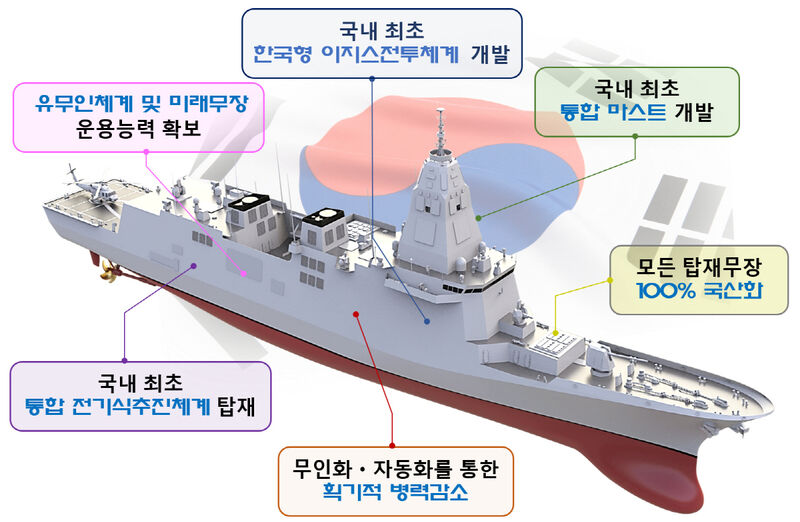 KDDX is South Korea’s next-generation indigenous destroyer program designed to enhance air defense, anti-submarine warfare and network-centric combat capabilities.
Estimated specifications (open-source projections):
Displacement: approximately 6,000–7,000 tons
Length: roughly 150–160 meters
Propulsion: Integrated Full Electric Propulsion (IFEP)
Vertical Launch System (VLS): Korean VLS cells for surface-to-air and surface-to-surface missiles
Primary Sensors: Indigenous multifunction radar system
Mission Roles: Area air defense, anti-submarine warfare (ASW), surface warfare and networked operations
The destroyer is also expected to incorporate enhanced stealth shaping and advanced command-and-control systems, serving as a core node in South Korea’s evolving maritime defense network. Jeong Jae-jun, head of DAPA’s Force Improvement Program Bureau, stressed the urgency of normalization.
“KDDX is a high-complexity systems integration project centered on indigenous weapon systems,” he said. “It is critical to recover the delayed schedule to prevent operational capability gaps. We will ensure a transparent and lawful selection process and work closely with relevant agencies to put the program back on track.”
With the competition formally relaunched and industry heavyweights preparing bids, the KDDX program has entered a decisive phase—one that will shape the future combat architecture of the Republic of Korea Navy and redefine the balance of power within South Korea’s naval shipbuilding sector.
K-DEFENSE NEWS | Strategic Analysis Desk
#KDDX #ROKNavy #DAPA #HanwhaOcean #HDHyundaiHeavyIndustries #NavalDefense #DestroyerProgram #Shipbuilding #DefenseIndustry #MaritimeSecurity


 Missiles Sell Fighters: KF-21’s Export Fate at Stake
 이스라엘 ‘다비드 슬링’ 요격체계, 미래 위협 대비 성능개량 시험 성공
 [단독] 모로코 국방장관, 사우디 WDS서 FA-50에 ‘관심’
 [단독] 캐나다 해군 수장 “신형 잠수함, 인도 후 북극 빙하 작전 개조 불가피”
 말레이시아 FA-50M 18대 추가 도입 추진, 자연스레 KF-21까지 이어간다
 목록
목록