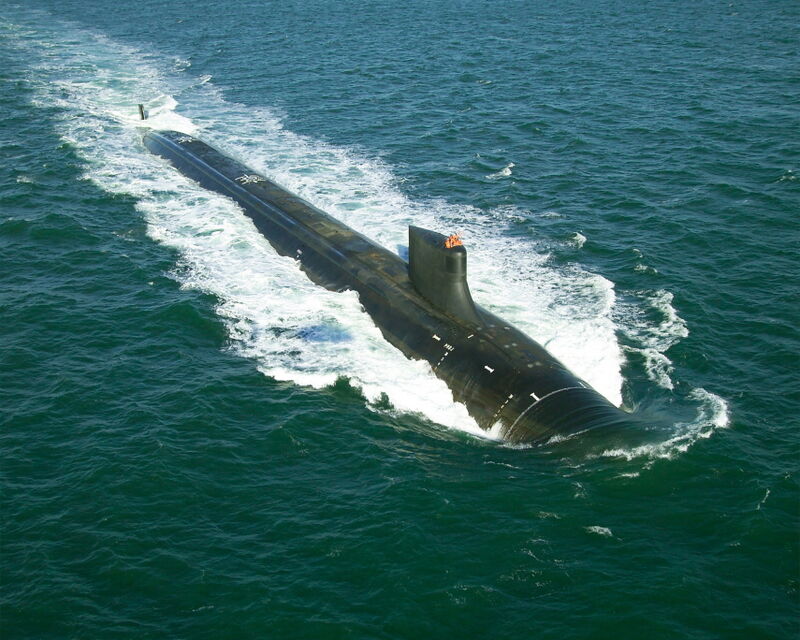
This marks the first time the formerly classified program has surfaced as an open national project. Government momentum is accelerating. During the 48th Cabinet Meeting, Defense Ministry official Won Jong-dae confirmed that, pending final consultations with Washington, fuel acquisition is feasible and construction could begin in the late 2020s—setting the stage for the first hull launch in the mid-to-late 2030s.
South Korea’s shipbuilding and defense sectors already possess much of the capability required to build a nuclear submarine:
Pressure Hull Steel: POSCO’s HY-100 steel—used in the Jang Young-sil submarine launched in October—enables dives below 400 meters and is the same grade applied to U.S. Navy Seawolf-class subs.
Weapons & Systems: Heavyweight torpedoes, guided weapons, sonar arrays, and combat management systems are largely indigenous.
Hydrodynamic Design: Local shipbuilders have already developed next-generation submarine hull concepts suited for sustained high-speed underwater operations. In short, the industrial foundation for hull, sensors, and weapons is largely in place.
Before the reactor is installed on a submarine, full-scale land-based prototyping and validation is essential. The historical precedent is clear: the U.S. Navy operated the prototype of the USS Nautilus reactor for years at the Idaho National Laboratory, far from urban areas. South Korea will require: A suitable test site, Environmental impact assessments, Agreements with local communities, Long-term nuclear safety and waste protocols, These processes will demand political consensus and transparent communication.
The shipyard tasked with building the K-SSN—and the naval base that will host it—must meet protection and radiation-shielding standards comparable to a nuclear power plant. This represents another major infrastructure challenge and will require early engagement with residents and local governments.
In defense programs, “the devil is in the details.” Nowhere is this truer than in nuclear propulsion. While hull, steel, sensors, weapons, and shipbuilding capacity are near readiness, the reactor remains the single point of failure—and the single point of opportunity.
If South Korea can successfully design, test, and certify a naval reactor, the K-SSN program will unlock: Continuous submerged endurance, Strategic-level stealth, Blue-water operational reach, A new maritime deterrence architecture for the ROK Navy.
Public support will be essential. As the government transitions the K-SSN into a national strategic program, clear communication and transparent risk management will be critical to securing national consensus.
K-DEFENSE NEWS | Strategic Analysis Desk


 South Korea Retires HH-32 Helicopters, Ending a Rare Era of Military Ties with Russia
 엘빗, 독일에 ‘유로펄스’ 유도탄 생산 허브 구축
 [단독] T-50i 2차분, 인도네시아 공군 인도 본격화
 미 해군, 하푼 블록 II 성능 개량형 최종 비행 시험 완료
 노르웨이에 천무 16문, 2.8조원 규모 수출! 사거리 500km 미사일 장착한다
 목록
목록