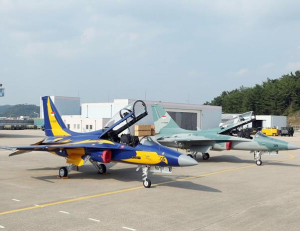
T-50/FA-50 family operates in seven countries with roughly 210 aircraft in service; including contracted and produced units, the total approaches 290—by far the largest footprint in its class.Across Southeast Asia and Europe, the FA-50’s expanding footprint—procurement, upgrades, operational use, and combat employment—shows that this aircraft is no longer a stopgap. It is increasingly treated as a structural element of air-force force design.
The Royal Malaysian Air Force’s consideration of a Phase-2 FA-50M acquisition—expanding the fleet from 18 to 36 aircraft—underscores a strategic reframing of the LCA’s role. Under the plan, 18 additional aircraft would complement the 18 ordered in 2023 (worth roughly MYR 4 billion), with first deliveries of the initial batch beginning in 2026. If completed, Malaysia would become one of the largest FA-50 operators in Southeast Asia. The driver is pragmatic force-gap management. As legacy fighters retire and timelines for a future Multi-Role Combat Aircraft (MRCA) remain uncertain, Kuala Lumpur is prioritizing continuity of combat readiness. The FA-50M is no longer viewed as a temporary bridge, but as a stabilizer that sustains operational tempo during a prolonged transition.
Beyond the classic LIFT-plus-LCA proposition, the FA-50M’s appeal lies in its maturing combat capability—modern avionics, precision-guided munitions, and credible air-defense, CAS, and maritime roles—combined with favorable operating economics. Scaling the fleet to 36 aircraft enables commonality across training, maintenance, logistics, and mission planning. Past a critical mass, an air force can shift from fragmented, type-by-type management to a unified operational baseline. The result is higher availability and sortie rates—achieved not by buying more high-end fighters, but by optimizing the backbone that keeps the force flying.
In Europe, the FA-50’s meaning has evolved even further. For Poland, it is not simply a rapid-fielding solution but a platform aligned with allied standards and coalition warfare. In early January 2026, Warsaw finalized documents integrating the AIM‑9X and confirming delivery schedules for the FA-50PL. A subsequent agreement with the U.S. government secured full AIM-9X integration support, while an annex signed with KAI adjusted the delivery timeline: first aircraft are now expected in mid-2027, with completion in early 2029. While the revised schedule might appear negative at first glance, Poland’s priority is clear—fielding a complete, interoperable configuration rather than rushing an interim solution.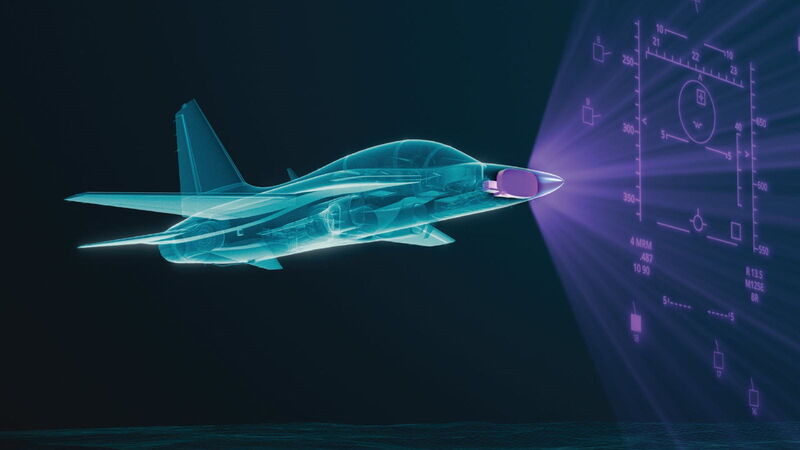 At the center of the FA-50PL upgrade is the avionics suite, led by the PhantomStrike AESA radar from RTX Raytheon.
At the center of the FA-50PL upgrade is the avionics suite, led by the PhantomStrike AESA radar from RTX Raytheon. This air-cooled, GaN-based sensor significantly enhances detection range, tracking accuracy, and multi-target engagement, pushing the FA-50 firmly into beyond-visual-range mission space. Paired with Link-16, the FA-50PL operates not as a standalone jet but as a networked node integrated with allied sensors and command-and-control assets. Weapons integration follows the same logic: AIM-9X for air combat; GBU-12 laser-guided bombs and the Sniper targeting pod for precision strike; aerial refueling for extended reach; and a helmet-mounted display to maximize situational awareness in high-G engagements.
Poland’s decision not to convert its FA-50GF (Gap Filler) aircraft to full PL standard reflects a maturing view of force optimization. Air Force leadership has been explicit: upgrading GF jets would not deliver sufficient return on investment. Instead, the FA-50GF fleet will focus on training and secondary combat roles, streamlining pilot progression to F-16C/Ds and F-35As while preserving flight hours on frontline fighters. The approach reduces strain on high-end assets and aligns aircraft capability with mission demand. Warsaw is also exploring CAS employment for the GF variant, with differentiated weapons such as ASRAAM or IRIS-T for air-to-air tasks and Brimstone for air-to-ground missions—further reinforcing role specialization over uniform maximalism.
Southeast Asia’s most dynamic FA-50 evolution is unfolding in the Philippines. On December 26, 2025, KAI signed a KRW 93 billion (≈USD 70 million) contract with Manila covering performance upgrades and follow-on support for 11 FA-50PH aircraft delivered between 2015 and 2017. The phased upgrade runs through 2029. The scope goes beyond incremental improvements. Enhanced precision-strike capability, increased range and endurance, sustained combat readiness, and improved network interoperability are designed to turn the FA-50PH into a coalition-ready node rather than a standalone light fighter.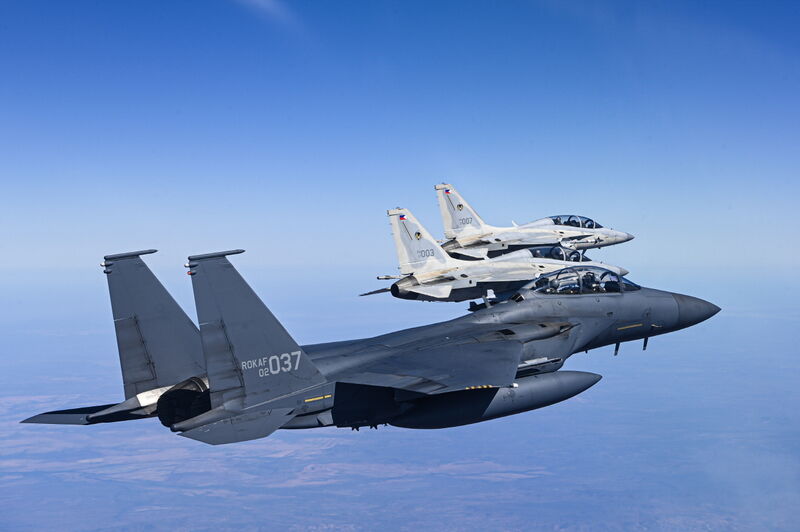 FA-50 family represents not just a platform—but a practical blueprint for how modern air forces balance readiness and modernization in the real world.
Manila is also pursuing additional FA-50 acquisitions, potentially expanding the fleet to around 23 aircraft. Industry observers increasingly cite the Philippine case as a textbook lifecycle model: acquire → operate → customize → sustain (PBL). Over a 30–40 year service life, support and upgrade costs can reach two to five times the initial procurement price—making lifecycle management, not sticker cost, the decisive factor. The FA-50PH’s combat record at Marawi in 2017 and its high availability during Pitch Black 2024 have reinforced confidence in the platform’s reliability and maintainability.
From Malaysia and Poland to the Philippines and Thailand, the FA-50’s trajectory points to more than export success. Today, the T-50/FA-50 family operates in seven countries with roughly 210 aircraft in service; including contracted and produced units, the total approaches 290—by far the largest footprint in its class. Malaysia’s 36-aircraft vision reframes LCAs as long-term stabilizers. Poland’s PL/GF division shows that mission-tailored optimization can outperform blanket top-tier upgrades. The Philippines demonstrates that lifecycle competitiveness is the real battleground in fighter exports. The message is unmistakable: light combat aircraft are no longer auxiliary forces. In an era defined by sustainability, networked operations, and resilience under constraint, the FA-50 family represents not just a platform—but a practical blueprint for how modern air forces balance readiness and modernization in the real world.
K-DEFENSE NEWS | Strategic Analysis Desk
#FA50 #KAI #RTX #Raytheon #LightCombatAircraft #LIFT #LeadInFighter
#AirPower #AirForceModernization #FighterAircraft


 South Korea Retires HH-32 Helicopters, Ending a Rare Era of Military Ties with Russia
 엘빗, 독일에 ‘유로펄스’ 유도탄 생산 허브 구축
 [단독] T-50i 2차분, 인도네시아 공군 인도 본격화
 미 해군, 하푼 블록 II 성능 개량형 최종 비행 시험 완료
 노르웨이에 천무 16문, 2.8조원 규모 수출! 사거리 500km 미사일 장착한다
 목록
목록