ROKAF the Ka-32 was inducted during the second phase of the Bulgom Project in 2004–2005 and designated the HH-32.Throughout its service life, the HH-32 operated around the clock, not only on routine SAR tasks but also in wildfire suppression, emergency medical evacuation, and maritime rescue. Known among crews as a “helicopter of the field,” it earned a reputation for reliability in harsh terrain and heavy seas, winning the confidence of pilots and rescue personnel alike.
The HH-32 is derived from the Ka-32, designed by Russia’s Kamov Design Bureau. In South Korea, the type became widely known simply as the “Kamov,” less by its NATO reporting name “Helix” than by its frequent appearances over wildfire zones. Praised for strong performance at a relatively reasonable cost, the aircraft is often regarded as a successful acquisition in operational terms.
The helicopter’s introduction was closely tied to the so-called “Bulgom Project(불곰사업),” a government-to-government arms procurement arrangement launched in the early 1990s. Under this framework, Russia—successor to the Soviet Union—settled part of its outstanding debt to South Korea by supplying military equipment rather than cash. The project, formally titled the Agreement on Military Technology, Defense Industry, and Logistics Cooperation between the Government of the Republic of Korea and the Government of the Russian Federation, evolved into a long-running and unexpected channel of bilateral defense cooperation.
The Ka-32 emerged as one of the most prominent platforms acquired through the Bulgom Project. Initially, the aircraft received mixed reviews due to operational constraints and unfamiliar maintenance requirements. However, its performance during repeated large-scale wildfire operations in the 2000s led to a reassessment of its value. Subsequent deployments by the Korea Forest Service and the Korea Coast Guard, along with additional civil and government purchases, elevated South Korea to the position of the world’s second-largest Ka-32 operator.
Within the Air Force, the Ka-32 was inducted during the second phase of the Bulgom Project in 2004–2005 and designated the HH-32. The type served primarily in SAR roles, while also being tasked with wildfire suppression and limited VIP transport duties. With the disbandment of its operating squadron in December 2025, the HH-32 was formally withdrawn from service.
After years of quiet, demanding work over skies, seas, mountains, and disaster sites, the ROKAF expressed deep respect and gratitude for every flight the HH-32 completed. A product of the Bulgom Project and a key component of the nation’s SAR force, the HH-32 has now concluded its mission—leaving behind a distinct legacy in the history of South Korean air operations.
K-DEFENSE NEWS | Strategic Analysis Desk
#HH32Retirement #EndOfAnEra #Kamov #Ka32 #ROKAirForce #SAROperations #WildfireResponse #ColdWarLegacy #DefenseCooperation


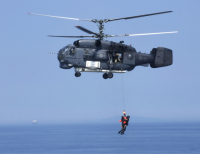 South Korea Retires HH-32 Helicopters, Ending a Rare Era of Military Ties with Russia
 엘빗, 독일에 ‘유로펄스’ 유도탄 생산 허브 구축
 [단독] T-50i 2차분, 인도네시아 공군 인도 본격화
 미 해군, 하푼 블록 II 성능 개량형 최종 비행 시험 완료
 노르웨이에 천무 16문, 2.8조원 규모 수출! 사거리 500km 미사일 장착한다
 목록
목록