The Short-Range Air-to-Air Missile-II (SRAAM-II) program is a research and development project led by the Agency for Defense Development (ADD) to develop a new short-range air-to-air missile for integration onto the KF-21 fighter aircraft. South Korea’s Defense Acquisition Program Administration (DAPA) announced on December 2 that it has formally launched the development of the Short-Range Air-to-Air Missile-II (SRAAM-II), a next-generation indigenous missile program intended for integration onto the KF-21 Boramae fighter.
The program kickoff meeting was held at the Agency for Defense Development (ADD) in Daejeon, with DAPA, ADD, and the Republic of Korea Air Force jointly emphasizing the strategic importance of Korea’s first domestically developed air-to-air missile.
The SRAAM-II program will be led by ADD and carried out in partnership with major Korean defense companies including LIG Nex1, Hanwha Aerospace, and Korea Aerospace Industries (KAI). South Korea will invest 4.359 trillion KRW (approx. USD 3.4 billion) from 2025 to 2032 to complete system development and prepare the missile for integration with the KF-21.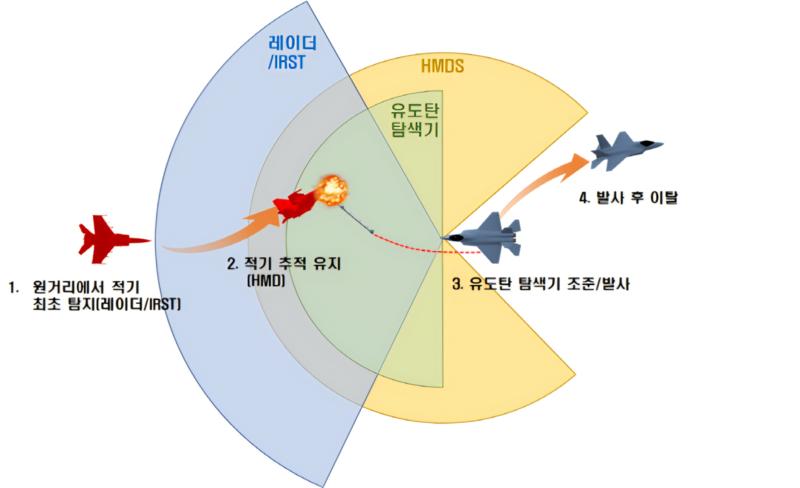 Concept of Operations for the Short-Range Air-to-Air Missile-II (SRAAM-II)
During the kickoff session, the participating organizations signed a cooperation agreement to accelerate domestic capability-building in high-performance airborne guided weapons and ensure successful full-scale development.
The SRAAM-II is expected to diversify the suite of homegrown weapons designed for the KF-21, complementing ADD’s ongoing Long-Range Air-to-Ground Missile (LRAAM) program, which began in 2018, as well as the Long-Range Air-to-Air Missile project scheduled to start next year.
Together, these programs form a comprehensive roadmap for building an indigenous missile ecosystem that strengthens operational sovereignty and opens new avenues for defense exports.
Jung Kyu-heon, head of DAPA’s Future Combat Power Program Group, emphasized the long-term value of the initiative, stating “The development of the Short-Range Air-to-Air Missile-II will serve as a critical milestone in advancing Korea’s airborne weapons capabilities and expanding our aerospace defense industry.”
The project underscores South Korea’s intensified push to equip the KF-21 with fully domestic missiles—enhancing self-reliance, reducing foreign dependency, and boosting international competitiveness in the global air-to-air missile market.
K-DEFENSE NEWS | Strategic Analysis Desk


 South Korea Retires HH-32 Helicopters, Ending a Rare Era of Military Ties with Russia
 엘빗, 독일에 ‘유로펄스’ 유도탄 생산 허브 구축
 [단독] T-50i 2차분, 인도네시아 공군 인도 본격화
 미 해군, 하푼 블록 II 성능 개량형 최종 비행 시험 완료
 노르웨이에 천무 16문, 2.8조원 규모 수출! 사거리 500km 미사일 장착한다
 목록
목록